


Password Security in 2026: Why Passwords Alone Aren’t Enough
Every year, World Password Day reminds us of something important: strong passwords matter.
They remain one of the first and most essential steps in protecting accounts, systems, and sensitive business data.
But as cyber threats evolve, password security also needs to evolve.
In 2026, strong passwords are still critical — but they work best as part of a layered cybersecurity strategy that includes multi-factor authentication, identity and access management, access control, monitoring, and network-level protection.
Why Password Security Is Still the First Line of Defense
Passwords remain a critical first layer of security.
Strong password practices such as using unique credentials, avoiding reuse, and regularly updating credentials are still essential for any organization.
However, relying on passwords alone leaves gaps that attackers are increasingly skilled at exploiting.
As Faizan Osman, Director of ICAT at CaTECH Systems, explains:
“Passwords are still part of the equation, but they should be treated as just one layer—not the primary defense.”
The Real Risk Lies Beyond the Password
Today’s cyber threats are no longer focused on simply “guessing” passwords.
Instead, they exploit patterns and behaviors:
- Reused credentials across multiple platforms
- Phishing attacks that bypass passwords entirely
- Weak access controls within internal systems
Even a strong password can be compromised if the surrounding systems are not secure.
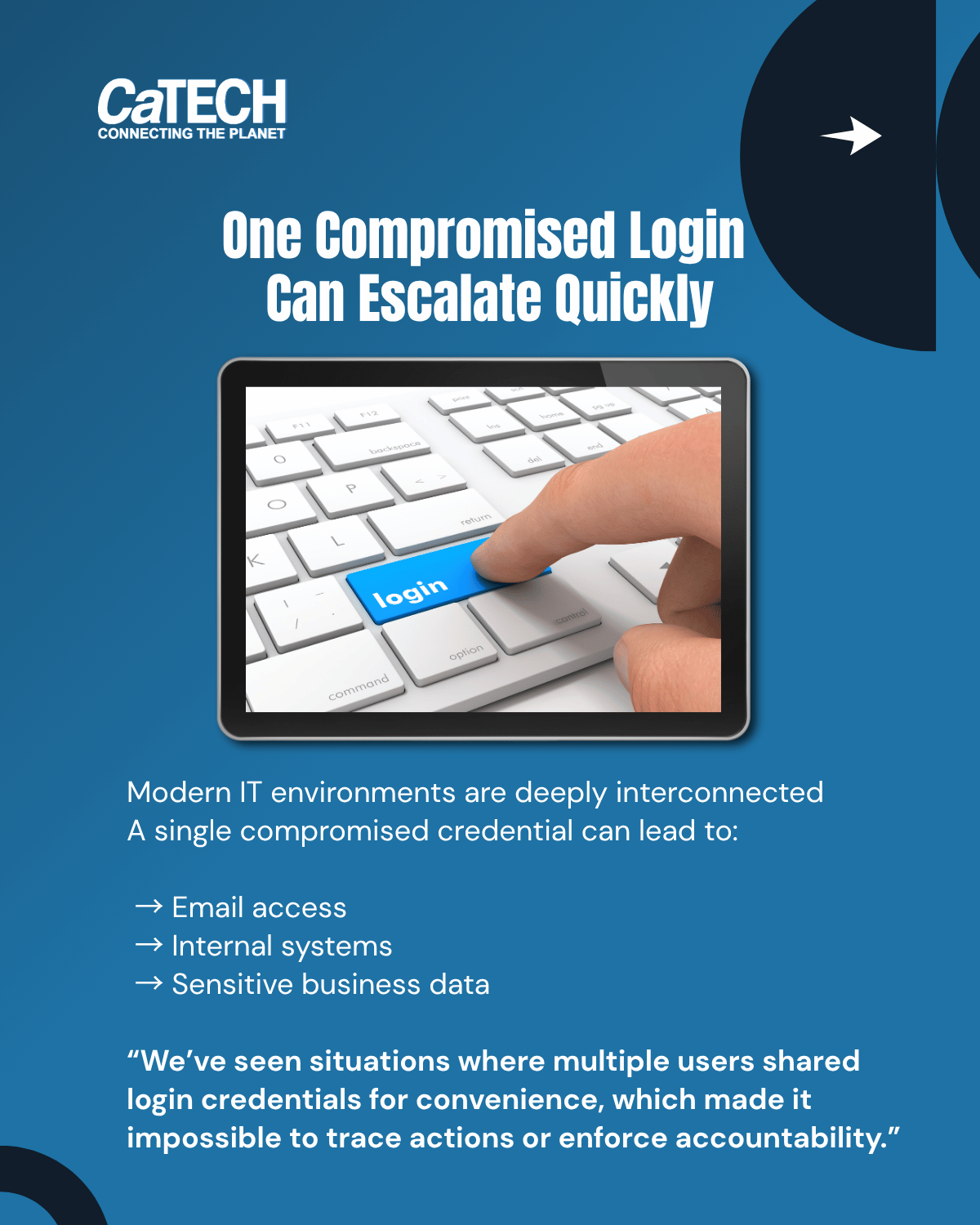
How One Compromised Credential Can Escalate Quickly
In modern IT environments, systems are highly interconnected.
That means:
- One compromised login can lead to email access
- Email access can lead to internal systems
- Internal access can lead to sensitive business data
Faizan shares a common real-world scenario:
“We’ve seen situations where multiple users shared login credentials for convenience, which made it impossible to trace actions or enforce accountability.”
What begins as convenience can quickly become a serious security risk.

The Biggest Misconception About Cybersecurity
Many organizations assume they are secure simply because they have tools in place.
“The biggest misconception is believing that having antivirus software or a firewall alone makes them secure.”
But cybersecurity is not a single product or tool.
It’s an ongoing strategy that combines:
- People
- Processes
- Technology
What Modern Cybersecurity Best Practices Looks Like
To strengthen security beyond passwords, organizations need a layered approach.
🔹 Multi-Factor Authentication (MFA)
Adds a second layer of verification
🔹 Identity & Access Management (IAM)
Controls who can access what, and when
🔹 Network-Level Security
Protects the underlying infrastructure
🔹 Monitoring & Threat Detection
Identifies unusual activity early
As Faizan puts it:
“Relying on a single control—like passwords—is similar to locking the front door but leaving the windows open.”
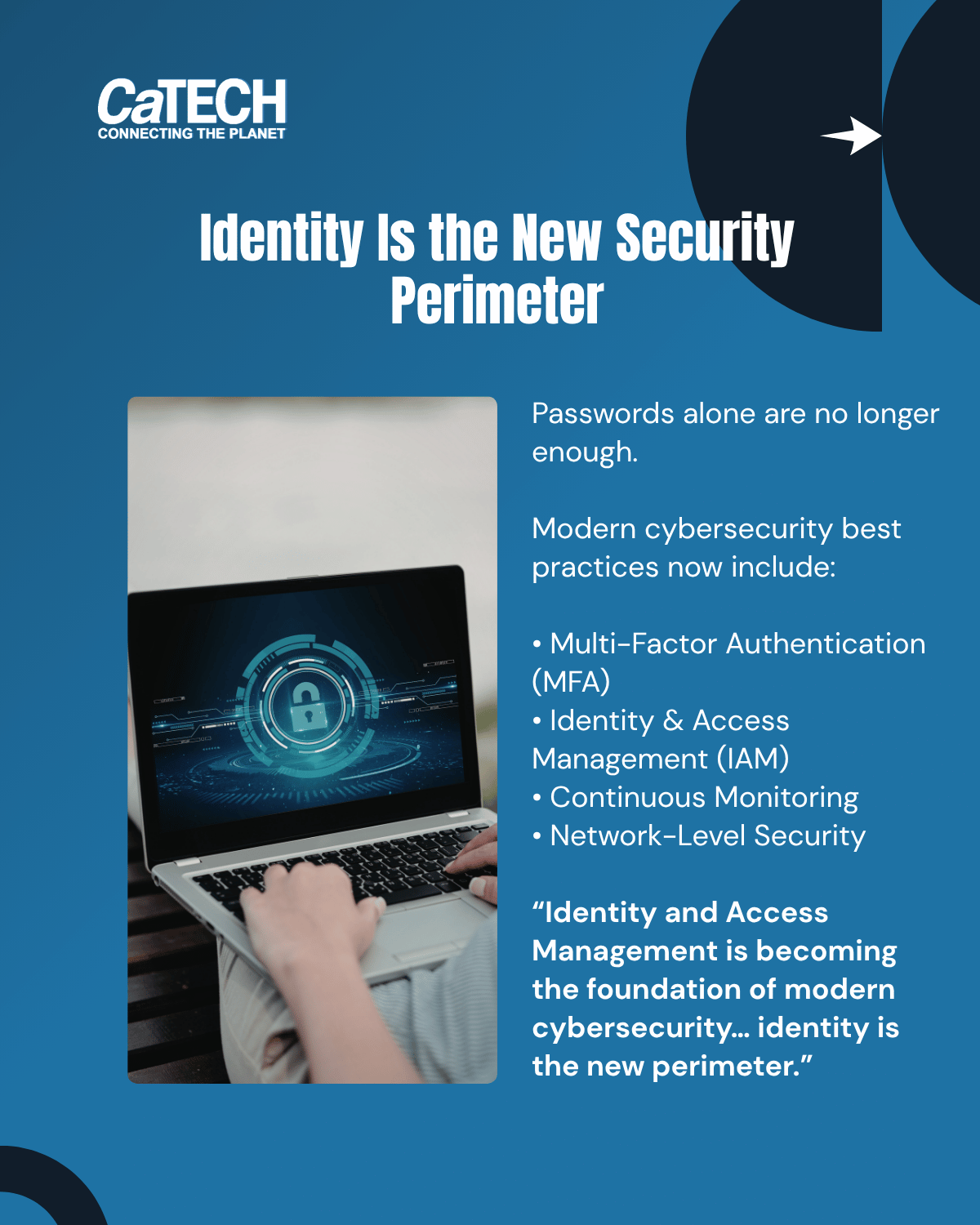
Identity and Access Management: The New Security Perimeter
With the rise of cloud platforms, remote work, and mobile devices, traditional network boundaries are no longer enough.
Identity is now at the center of cybersecurity.
“Identity and Access Management is becoming the foundation of modern cybersecurity… identity is the new perimeter.”
Access decisions are now based on:
- Who the user is
- What device they are using
- Where they are connecting from
- What they are trying to access
Why This Matters More Than Ever
As organizations adopt:
- Remote work environments
- Cloud-based systems
- AI-driven technologies
The attack surface continues to expand.
Passwords were designed for a much simpler time.
Today’s environments require continuous validation and proactive protection.

One Step Organizations Can Take This World Password Day
If there’s one simple but powerful action to strengthen security:
Enable Multi-Factor Authentication (MFA)
“This single step dramatically reduces the risk of unauthorized access caused by compromised passwords.”
Start with:
- Email systems
- VPN access
- Cloud applications
What Defines Strong Cybersecurity Today? We asked Faizan to summarize it in one sentence:
“A strong cybersecurity strategy today is built on layered protection, identity-based access control, continuous monitoring, and proactive risk management—not just passwords alone.”
Final Thought
Passwords are still important. They are the foundation but not the full structure.
This World Password Day, don’t just update your passwords, update your approach to security.
Because in today’s world:
- Strong passwords protect access.
- Smart systems protect everything else.
Strengthen Your Password Security Strategy with CaTECH
Looking to Strengthen Your Password Security and Cybersecurity Strategy?
CaTECH helps organizations build secure, scalable IT environments — from identity and access control to infrastructure-level protection.
Speak with our team to review your current security posture and identify practical next steps.